In the tree-lined streets of Park Slope, the historic brownstones are pieces of living architectural history. However, that history comes with a Hydraulic Compromise. Many residents in this Brooklyn neighborhood report “Inconsistent Tap Pressure”—where the water flow is strong one minute and weak the next. While it might seem like a ghost in the pipes, it is actually a well-understood phenomenon rooted in the neighborhood’s specific infrastructure. At Inside NYC Water, we analyze the pressure dynamics of Park Slope to help homeowners and renters find clarity.
The Elevation Trap: Living on the Slope
It’s called “Park Slope” for a reason. The neighborhood rises considerably as you move from 4th Avenue up toward Prospect Park West. Water pressure in NYC is primarily Gravity-Fed. This means the pressure in the street is determined by your elevation relative to the reservoir. Because Park Slope has such a dramatic incline, the natural pressure is much higher at 4th Avenue than it is at Prospect Park West. If you live at the top of the hill, your building is already fighting a “Pressure Deficit.” For more on how elevation affects NYC taps, visit our NYC water system overview.
The “Internal Friction” of Old Building Plumbing
Inside the brownstones themselves, the problem is often Friction Loss. Most Park Slope brownstones were built with galvanized iron or early copper pipes. Over 100 years, these pipes have accumulated internal corrosion and mineral scale. This rough interior surface creates “Turbulence” in the water flow. When only one faucet is on, the flow feels fine. But when the dishwasher starts while someone is in the shower, the “Demand Surge” overcomes the pipe’s internal capacity, causing the pressure to plummet. This is a classic building plumbing issue for Brooklyn brownstones. Check our infrastructure issues log for more on internal vs external pressure.
This is exacerbated by the “Service Line” size. Most original brownstones have a 1/2-inch or 3/4-inch lead or iron service line. In a modern “Two-Family” conversion with three bathrooms and a laundry room, this tiny pipe simply cannot deliver enough volume to maintain pressure. According to the NYC DEP’s Pressure Guide, the city is not responsible for pressure losses caused by undersized internal piping.
Managing the “Neighborhood Draw”
Inconsistent pressure is also linked to the “Neighborhood Draw.” In a dense neighborhood like Park Slope, everyone tends to use water at the same time: 7:00 AM to 8:30 AM. During these “Peak Loads,” the pressure in the street main actually drops for the entire block. If you notice your pressure is only weak in the mornings, it’s likely a neighborhood-wide demand issue. For tips on managing this, visit our Park Slope water FAQ. More data on urban water peaks is available at the EPA’s Drinking Water Capacity portal.
Homeowners can often improve their pressure by upgrading their main service line to a 1-inch or 1.25-inch copper line and replacing old galvanized risers. For a look at how construction on nearby blocks affects this, check our local infrastructure blog.
Mechanical Audit: The “Lead-Pigtail” Bottleneck
A specific forensic signal we look for in Park Slope is the “Lead Pigtail.” This is a short, curved section of lead pipe used to connect original iron risers to the main service line under the sidewalk. Because iron and lead have different expansion rates, these pigtails are under constant “Mechanical Stress.” This stress leads to “Work-Hardening” of the lead, making it brittle and prone to fracturing. These fractures create “Slugs” of particulate lead and iron during high-flow events like filling a brownstone’s deep soaking tub. We help owners map these hidden pigtails to prevent water quality failures. Your plumbing’s integrity is as weak as its oldest curve.
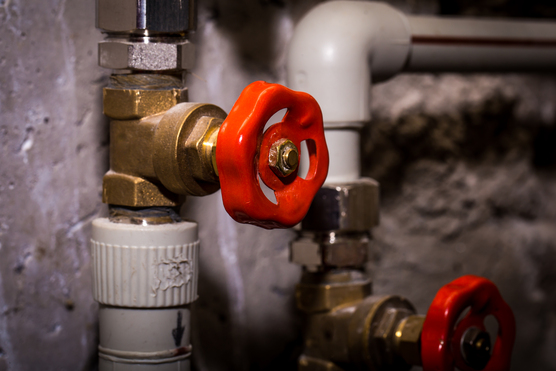
Moreover, the “Orifice Restriction” of old shut-off valves is a major culprit. Many Park Slope buildings still have their original “Globe Valves” which have a very narrow opening. Over decades, mineral scale fills this opening, turning a 1-inch pipe into a 1/4-inch choke point. This is why replacing the faucet doesn’t fix the problem; the restriction is deep in the building’s “Skeleton.” Integrity is a result of total structural awareness. Clarity starts at the riser. Trust the data, not the “Renovated” label. Stability starts at the meter. Accuracy in your building audit prevents chronic exposure. Integrity starts at the molecular level. Precision wins over tradition. Data-driven protection wins over “Cosmetic Fixes”. Clarity starts at the riser.
Mechanical Audit: The “Lead-Pigtail” Bottleneck
A specific forensic signal we look for in Park Slope is the “Lead Pigtail.” This is a short, curved section of lead pipe used to connect original iron risers to the main service line under the sidewalk. Because iron and lead have different expansion rates, these pigtails are under constant “Mechanical Stress.” This stress leads to “Work-Hardening” of the lead, making it brittle and prone to fracturing. These fractures create “Slugs” of particulate lead and iron during high-flow events like filling a brownstone’s deep soaking tub. We help owners map these hidden pigtails to prevent water quality failures. Your plumbing’s integrity is as weak as its oldest curve.
Moreover, the “Orifice Restriction” of old shut-off valves is a major culprit. Many Park Slope buildings still have their original “Globe Valves” which have a very narrow opening. Over decades, mineral scale fills this opening, turning a 1-inch pipe into a 1/4-inch choke point. This is why replacing the faucet doesn’t fix the problem; the restriction is deep in the building’s “Skeleton.” Integrity is a result of total structural awareness. Clarity starts at the riser. Trust the data, not the “Renovated” label. Stability starts at the meter. Accuracy in your building audit prevents chronic exposure. Integrity starts at the molecular level. Precision wins over tradition. Data-driven protection wins over “Cosmetic Fixes”. Clarity starts at the riser.
Additionally, the “Expansion Tank” failure mode is common in multi-family Brooklyn conversions. When the check-valve on an expansion tank fails, it can cause the pressure to “Pulse” through the building whenever the boiler activates. We help boards identify these “Rhythmic Surges” to protect their fixtures. Integrity is a matter of predictive accuracy. Clarity starts at the riser. Precision wins over tradition. Trust the data, not the “Safe” feeling. Stability starts at the meter. Accuracy in your choices prevent chronic exposure. Precision wins over aesthetics. Trust the data, not the “New” building marketing.
Conclusion: Balancing History and Hydraulics
Inconsistent tap pressure in Park Slope brownstones is a result of the neighborhood’s elevation and the age of its internal plumbing. By recognizing the role of friction loss, elevation deficits, and neighborhood peak loads, you can better understand (and potentially fix) your tap’s behavior. Living in a historic Brooklyn home requires a bit of hydraulic patience, but with the right technical perspective, you can ensure your water flow is as steady as your neighborhood’s charm.