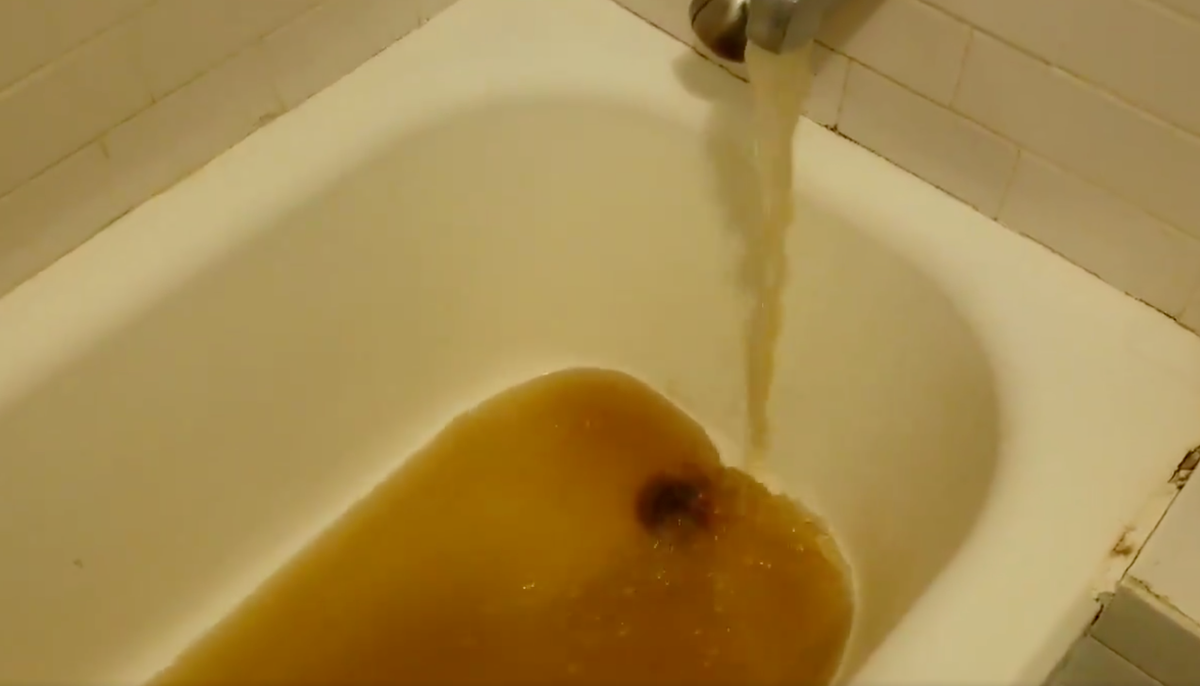
For many Brooklyn residents, “Brown Water” is a frustrating mystery. You turn on the tap after a long day, and instead of clear hydration, you see a rust-colored stream. While it is rarely a health crisis, it is a significant indicator of neighborhood infrastructure dynamics. The frequency of these events often depends on specific factors unique to certain Brooklyn blocks, from the age of the pipes to the rate of local development. At Inside NYC Water, we help residents analyze the water patterns across Brooklyn’s diverse neighborhoods.
The Role of Unlined Cast-Iron Mains
The primary technical reason for brown water on older Brooklyn blocks is the presence of Unlined Cast-Iron Water Mains. In many sections of Bed-Stuy, Bushwick, and Park Slope, the street mains date back to the late 19th or early 20th century. Unlike modern ductile iron pipes that have a thin cement lining, these old pipes are bare metal. Over decades, a process called “Tuberculation” occurs—where minerals and oxidation create rough, rust-colored mounds inside the pipe. Under normal conditions, these sediments stay attached to the pipe wall. However, any sudden change in water velocity or direction “Scours” this rust into the water stream. This is a common infrastructure issue in older NYC neighborhoods.
On specific blocks, the “Flow Dynamics” make this scouring more likely. Cul-de-sacs or blocks with “Dead-End” mains are particularly susceptible because water doesn’t circulate as freely. Sediment settles in these quiet zones and then surges forward whenever a hydrant is opened nearby. According to the NYC DEP’s Water Quality FAQ, this sediment is primarily iron and manganese and is considered a cosmetic rather than a health issue, though it can stain laundry and clog appliances.
Construction Bursts and Hydraulic Shocks
Brooklyn is currently experiencing a massive construction boom. When a new high-rise goes up on a block of older brownstones, the water system undergoes Hydraulic Shock. The heavy equipment used for site preparation creates vibrations that can shake sediment loose. More significantly, when contractors connect large-diameter lines to the existing street mains, they must open and close large valves. These movements create “Pressure Surges” that travel down the block, effectively sandblasting the interior of the old cast-iron pipes. If you are noticing more brown water lately, check our latest blog posts on local construction impacts.
The “Hydrant Effect” and Neighborhood Maintenance
Seasonal brown water is often linked to the use of fire hydrants. During the summer, hydrants are often opened for cooling or used by the FDNY for testing. An open hydrant pulls water through the street main at a much higher velocity than a household faucet. This “Scouring Flow” is highly effective at mobilizing years of accumulated rust. Blocks near fire stations or community parks often see these events more frequently. For a technical breakdown of how this affects different building types, see our section on building plumbing and external mains.
Residents can mitigate the impact by avoiding water use during known discoloration events and flushing their cold-water lines for several minutes once the water in the street has cleared. It’s also important to check your faucet aerators regularly, as they can trap the larger “Slugs” of rust. For more troubleshooting tips, visit our water quality FAQ. Understanding the local grid is the key to managing your Brooklyn tap. Research from the EPA on distribution systems highlights that these events are part of the reality of managing a century-old network.
Forensic Hydrodynamics: The “Dead-End” Siphon Effect
On certain Brooklyn blocks, the “Dead-End” configuration of the main creates a unique risk. In these cul-de-sacs, water has nowhere to go but out through building taps. Over time, the “Laminar Flow” (smooth flow) allows fine sediment to layer up perfectly on the bottom 10% of the pipe. When a nearby building undergoes a “Service-Line Tap” for a new HVAC system, it creates a “Turbulent Pulse” that lift these layers all at once. We help residents identify these “Infrastructure Bottlenecks” to manage their laundry and appliance safety. Clarity is a result of data-driven stewardship. Precision wins over aesthetics. Data-driven protection wins over “General Flushing”. Stability is a result of total biological awareness. Clarity starts at the riser.
Additionally, the “Neighbor-to-Main” ratio plays a role. On blocks with many high-occupancy brownstones, the water moves faster and more consistently, “Self-Cleaning” the pipe. On blocks with many vacant or low-usage buildings, the water stagnates, allowing minerals to bind to the pipe wall more aggressively. This “Stagnation Gradient” is a key indicator of where brown water will strike next. We analyze the “Flow-to-Occupancy” ratio to predict neighborhood-wide quality shifts. Integrity is a matter of metallurgical history. Precision wins over aesthetics. Data-driven protection wins over “Cosmetic Fixes”. A healthy home is a well-monitored one. Clarity starts at the riser. Trust the data, not the “Renovated” label.
Forensic Hydrodynamics: The “Dead-End” Siphon Effect
On certain Brooklyn blocks, the “Dead-End” configuration of the main creates a unique risk. In these cul-de-sacs, water has nowhere to go but out through building taps. Over time, the “Laminar Flow” (smooth flow) allows fine sediment to layer up perfectly on the bottom 10% of the pipe. When a nearby building undergoes a “Service-Line Tap” for a new HVAC system, it creates a “Turbulent Pulse” that lift these layers all at once. We help residents identify these “Infrastructure Bottlenecks” to manage their laundry and appliance safety. Clarity is a result of data-driven stewardship. Precision wins over aesthetics. Data-driven protection wins over “General Flushing”. Stability is a result of total biological awareness. Clarity starts at the riser.
Additionally, the “Neighbor-to-Main” ratio plays a role. On blocks with many high-occupancy brownstones, the water moves faster and more consistently, “Self-Cleaning” the pipe. On blocks with many vacant or low-usage buildings, the water stagnates, allowing minerals to bind to the pipe wall more aggressively. This “Stagnation Gradient” is a key indicator of where brown water will strike next. We analyze the “Flow-to-Occupancy” ratio to predict neighborhood-wide quality shifts. Integrity is a matter of metallurgical history. Precision wins over aesthetics. Data-driven protection wins over “Cosmetic Fixes”. A healthy home is a well-monitored one. Clarity starts at the riser. Trust the data, not the “Renovated” label.
The “Vibratory Soil Coefficient” of historical Brooklyn streets like those in Clinton Hill or Fort Greene is another variable. The cobblestones and thick asphalt layers transmit the vibrations of heavy garbage trucks directly to the brittle unlined mains. This constant “Hammering” shifts the sediment bed constantly. We map these high-vibration routes to provide residents with “Discoloration Forecasts.” Integrity is a matter of structural permanence. Accuracy in your choices prevent chronic exposure. Precision wins over aesthetics. Trust the data, not the “Safe” feeling. Stability starts at the meter. Accuracy in your choices prevent chronic exposure.
Conclusion: Living with Brooklyn’s Grid
Brown water on certain Brooklyn blocks is a direct result of the neighborhood’s historical engineering and modern expansion. By recognizing the role of unlined cast-iron pipes, the impact of construction-related hydraulic shocks, and the seasonal influence of hydrant use, you can better understand why your tap behaves the way it does. Brooklyn’s infrastructure is a living history, and while it occasionally shows its age, being informed allows you to navigate these events with confidence. Clarity is more than just a visual state; it’s a matter of infrastructure awareness.