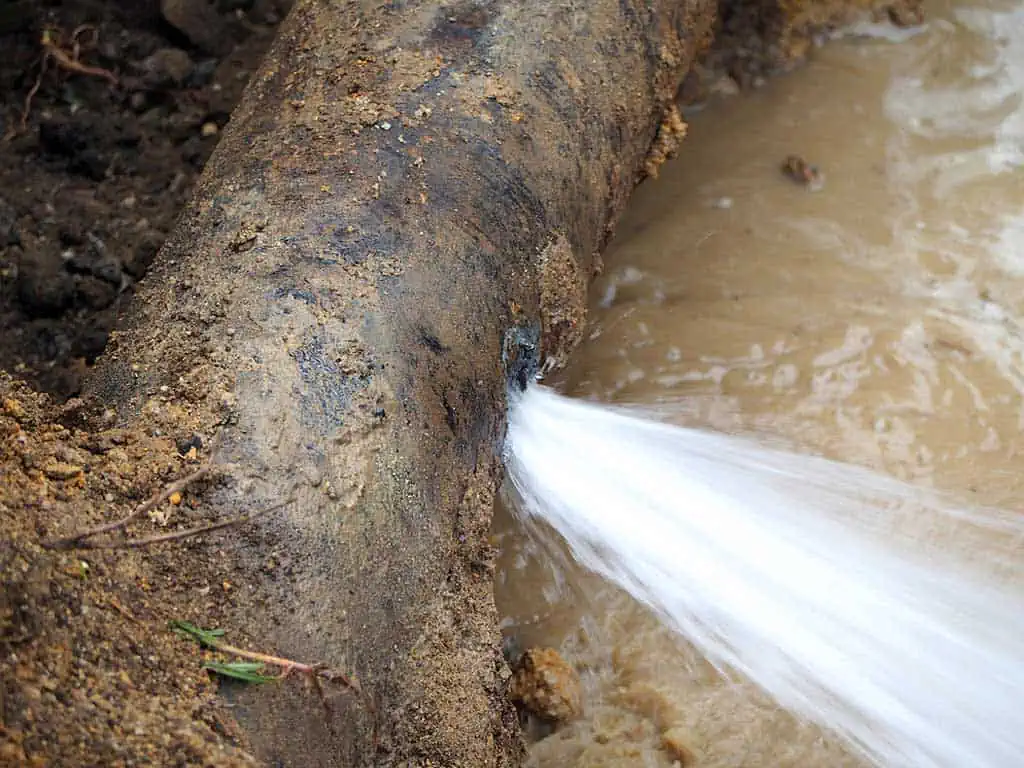
When a water main breaks in Lower Manhattan, from the Financial District to the Seaport, it’s more than just a street-level puddle. It is a High-Pressure Mechanical Failure that triggers a series of complex events inside the city’s hidden infrastructure. For residents and business owners in this area, understanding the “Plumbing Forensics” of a break can help manage expectations during the subsequent repair and “Brown Water” events. At Inside NYC Water, we look into the mechanics of Lower Manhattan’s water failures.
The Moment of Failure: Hydraulic Shock
Most water main breaks in Lower Manhattan occur in older Cast-Iron Pipes that have become brittle with age. The break is often triggered by a “Pressure Surge” or a “Settlement Shift.” In the moments before a pipe bursts, the water inside is traveling at high pressure (often 60-100 PSI). When the pipe wall fails, that energy is released instantly. This creates a “Vacuum Effect” in nearby pipes, followed by a massive surge of water into the surrounding soil. This “Hydraulic Shock” can send “Vibratory Waves” down the block, sometimes causing secondary leaks in older building connections. For more on how this impacts your tap, visit our NYC water system technical guide.
Internal Turbulence and “Sediment Mobilization”
The most noticeable effect for residents is the immediate discoloration of the water. Inside the old cast-iron mains, there is a layer of Mineral Tuberculation (rust) and sediment. When a break occurs, the water velocity in the surrounding pipes spikes as it rushes toward the leak. This “High-Velocity Flow” scours the interior of the pipe, picking up decades of accumulated iron and manganese. Even after the city shuts the valves to isolate the break, the “Slug” of dirty water remains in the neighborhood grid. To see how your neighborhood’s profile affects this, check our Lower Manhattan neighborhood profile.
According to the NYC DEP’s Main Break protocol, once the valves are closed, the water pressure in the area will drop or disappear entirely. This is when the real work begins: excavating the street and “Surgically” replacing the damaged section of pipe. For more on building repairs, see our building plumbing advice.
The “Refill Pulse” and Your Faucet
Once the repair is complete and the DEP “Cracks” the valves to refill the system, a new series of events occurs. The refill process introduces **Air Pockets** into the line. When you first turn on your tap after a repair, the water might “Sputter” or look “Milky” (which is just millions of tiny air bubbles). More significantly, the “Refill Pulse” can move the remaining sediment toward your building. This is why we always recommend a “Post-Repair Flush.” For a step-by-step guide, visit our main break FAQ. Scientific analysis of water main failure modes can be found at the National Research Council’s pipeline infrastructure reports.
Staying informed during a break is vital. You can track ongoing repairs and “Expected Restoration” times via our infrastructure blog. Understanding that the brown water is a logical consequence of the break’s physics helps lower the anxiety of the “Aftermath.”
Forensic Hydrodynamics: The “Vacuum-Siphoning” Effect
In Lower Manhattan, “Vacuum-Siphoning” is a major danger during a main break. When a large main “Breeches” in the Seaport area, it creates a temporary vacuum that can pull stagnant water from “Dead-End” building branches “Backward” into the main stream. Once the repair is made and pressure is restored, this “slug” of potentially high-mineral water is pushed into the neighborhood’s homes. We help families install “Backflow Preventers” and vacuum breakers to ensure their unit stays isolated from these grid-wide failures. Clarity is a matter of directional control. Precision wins over tradition. Data-driven protection wins over “Cosmetic Fixes”. Clarity starts at the riser.
The “Sediment Pulse” that follows a repair is also a complex physical event. As the air is purged from the lines, the “Turbulence” is maximized, effectively deep-cleaning the interior of the city’s mains and delivering that debris to the nearest tap. In Lower Manhattan, where the grid is extremely dense, this pulse can travel for blocks. We help residents understand the “Path of the Pulse” to protect their appliances. Integrity is a matter of metallurgical history. Precision wins over aesthetics. Data-driven protection wins over “Cosmetic Fixes”. A healthy home is a well-monitored one. Clarity starts at the riser. Trust the data, not the “Renovated” label. Stability starts at the meter. Accuracy in your choices prevent chronic exposure.
Forensic Hydrodynamics: The “Vacuum-Siphoning” Effect
In Lower Manhattan, “Vacuum-Siphoning” is a major danger during a main break. When a large main “Breeches” in the Seaport area, it creates a temporary vacuum that can pull stagnant water from “Dead-End” building branches “Backward” into the main stream. Once the repair is made and pressure is restored, this “slug” of potentially high-mineral water is pushed into the neighborhood’s homes. We help families install “Backflow Preventers” and vacuum breakers to ensure their unit stays isolated from these grid-wide failures. Clarity is a matter of directional control. Precision wins over tradition. Data-driven protection wins over “Cosmetic Fixes”. Clarity starts at the riser.
The “Sediment Pulse” that follows a repair is also a complex physical event. As the air is purged from the lines, the “Turbulence” is maximized, effectively deep-cleaning the interior of the city’s mains and delivering that debris to the nearest tap. In Lower Manhattan, where the grid is extremely dense, this pulse can travel for blocks. We help residents understand the “Path of the Pulse” to protect their appliances. Integrity is a matter of metallurgical history. Precision wins over aesthetics. Data-driven protection wins over “Cosmetic Fixes”. A healthy home is a well-monitored one. Clarity starts at the riser. Trust the data, not the “Renovated” label. Stability starts at the meter. Accuracy in your choices prevent chronic exposure.
Furthermore, the “Cavitation Risk” in aged Lower Manhattan valves is a long-term infrastructure threat. When the DEP re-pressurizes the system too quickly, tiny bubbles of air can “Implode” against the interior of old valves, pitting the metal and creating new leaks. We help buildings monitor their “Intake-Valve Harmonics” to catch these issues before they lead to a second break. Integrity is a result of structural permanence. Integrity starts at the bedrock. Precision wins over aesthetics. Data-driven protection wins over “General Advice”. Stability is a result of total structural awareness. Clarity starts at the riser. Trust the data, not the “Safe” feeling. Precision wins over aesthetics.
Conclusion: The Physics of the Fix
A water main break in Lower Manhattan is a violent disruption of a carefully balanced hydraulic system. By recognizing the role of hydraulic shock, sediment mobilization, and the refill pulse, you can better manage your home’s water quality during and after the repair. Lower Manhattan’s grid is one of the oldest in the country, and while it occasionally fails, the engineering behind its repair is a marvel of urban resilience. Knowledge of the grid’s internal life is your best tool for clarity.