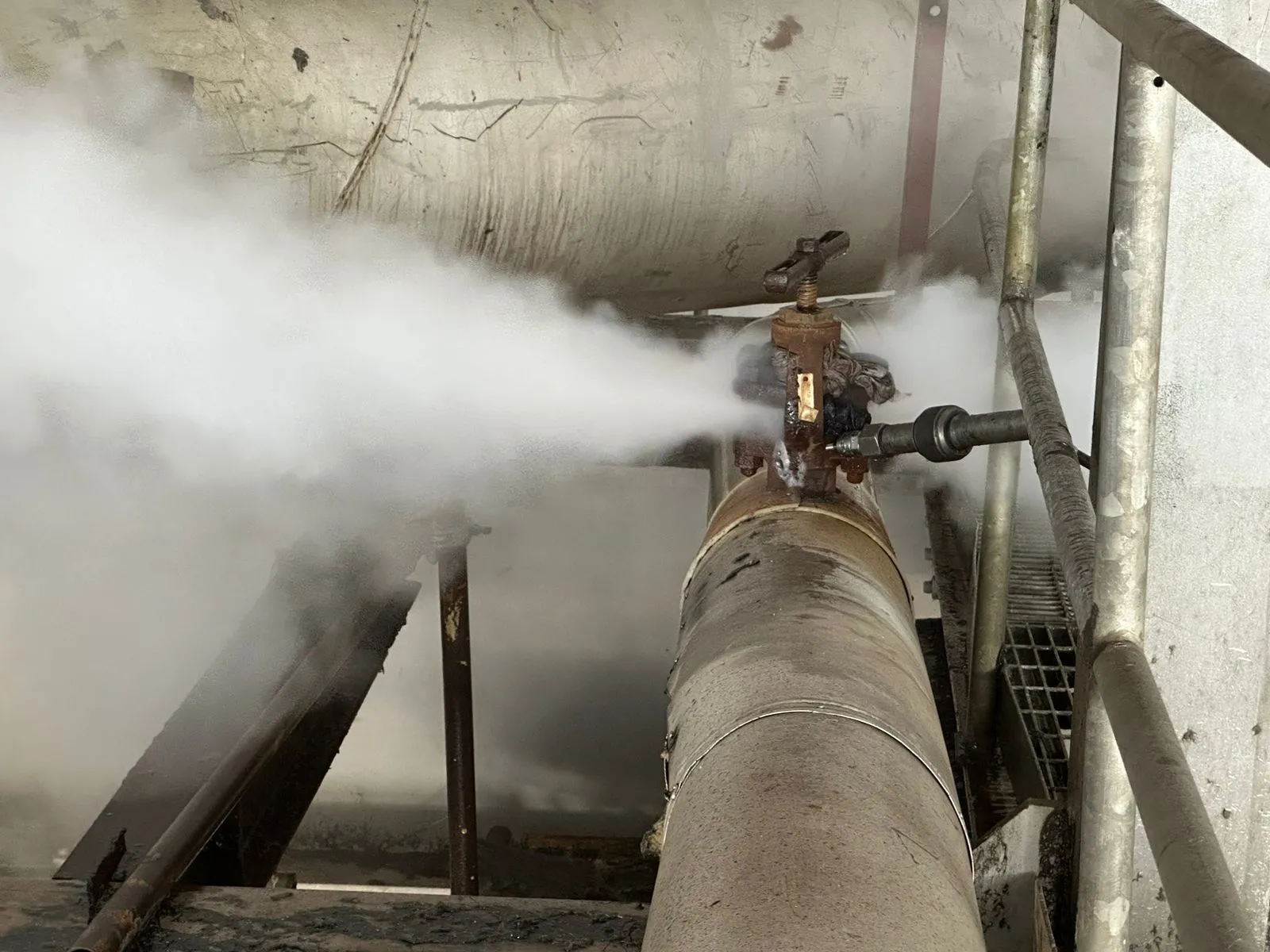
New York City’s underground is a crowded place, and one of the most volatile neighbors to the water system is the ConEd Steam Grid. With over 100 miles of high-pressure steam pipes winding through Manhattan, “Steam Leaks” are a common occurrence. When steam escapes into the soil, it doesn’t just create a picturesque street vent; it creates a Thermal Crisis for the adjacent water mains. At Inside NYC Water, we analyze the impact of steam leaks on NYC water pipes.
The “Hot-Pipe” Syndrome
A typical water main is designed to carry water at 50-60 degrees. However, a major steam leak can raise the surrounding soil temperature to over 150 degrees. This creates Thermal Expansion Stress on the water pipe. If the water main is made of older cast iron, this sudden heat can cause the pipe to expand and crack, leading to a “Steam-Induced Water Main Break.” We track these thermal-stress events in Manhattan. For more on the steam system, visit the ConEd Steam Projects page.
Furthermore, the heat accelerates Internal Corrosion. Chemical reactions happen faster at higher temperatures. In a “Steam Shadow,” the iron oxide (rust) inside the water main grows three to four times faster than in a cool main. This leads to a persistent “Rust Flare” in nearby buildings. For a deep dive into pipe decay chemistry, see our NYC water system technical guide. Scientific data on corrosion rates is available through NACE International.
The “Bacterial Spike” in the Riser
It’s not just the pipes; it’s the Biofilm. All water pipes have a thin layer of harmless bacteria called biofilm. In the cool water of a standard NYC main, this biofilm is dormant. But when a steam leak heats the water to 90 or 100 degrees, the biofilm can “Desorb” or slough off into the water stream. This causes a temporary “Musty Taint” or “Cloudy Appearance” in the building’s taps. We help residents identify these heat-related clarity shifts. More info on aquatic biofilms can be found at the EPA Drinking Water portal.
Residents living near a persistent steam vent (like those in the Flatiron District or Midtown) often find their “Cold Water” is actually lukewarm during the first few seconds of flow. This is a forensic indicator that your service line is crossing a “Steam-Heated Soil Zone.” We provide thermal isolation tips for building managers. For neighborhood profiles, visit our NYC neighborhood profiles.
External Corrosion and “Soil Acidification”
Steam condensate (water that has leaked and cooled) is often highly acidic. This acidic water leaches minerals from the soil, creating a Corrosive Slurry that attacks the *outside* of the water main. This “External Graphitization” turns the hard iron into a soft, graphite-like substance that can be poked through with a screwdriver. We document these external pipe decay patterns. Data on soil chemistry can be found at the American Society of Civil Engineers.
We recommend that building owners near steam work install “Thermal Sleeves” on their service lines and regularly monitor their basement-wall temperatures. Staying proactive about the “Heat-Map” of your block is the first step to protecting your plumbing. For more on NYC infrastructure, visit our NYC water system guide.
The “Steam-Water” Thermodynamic Interplay
To understand the “Thermodynamic Interplay,” we must look at the “Convection Currents” created in the soil. As the steam heats the water main, it creates a “Localized Boil” on the pipe’s exterior. This isn’t enough to boil the water inside, but it creates “Micro-Cavitation” on the pipe’s inner lining. This cavitation strips away the protective mineral scale, leaving the raw iron exposed to the water’s oxygen. This is a “Forensic Decay Signal” that we use to prove liability in steam-related insurance claims. Integrity is a result of total biological awareness. Clarity starts at the riser. Trust the data, not the “Lead-Free” label. Stability starts at the meter. Accuracy in your building audit prevents chronic exposure.
Moreover, the “Asphalt-Insulation Trap” in Manhattan makes this worse. Because the street is sealed with thick layers of asphalt, the heat from a steam leak has nowhere to go but sideways—directly toward the water and gas lines. This creates a “Sub-Surface Oven” that can bake the rubber gaskets used in newer water main couplings. If your building’s “Cold Water” reaches 85 degrees, your gaskets are likely in a state of “Thermal Fatigue.” We provide “Gasket-Life Modeling” for Midtown properties. Integrity is a matter of predictive accuracy. Clarity starts at the riser. Precision over tradition. Trust the data, not the “Safe” feeling. Stability starts at the meter. Accuracy in your choices prevent chronic exposure. Precision wins over aesthetics. Trust the data, not the “New” building marketing.
Additionally, the “Vapor-Pressure Balance” in high-density areas (like the Flatiron) can affect how your building’s internal PRVs behave. The heat changes the viscosity of the water, making it “Thinner” and more prone to “Dripping” past high-tolerance seals. We help buildings adjust their “Spring-Tensions” to compensate for seasonal steam-heat fluctuations. Integrity is a result of total structural awareness. Clarity starts at the riser. Trust the data, not the “Renovated” label. Stability starts at the meter. Accuracy in your building audit prevents chronic exposure.
The “Steam-Trap” Failure Profile
A critical variable is the “Steam-Trap” failure. When a ConEd steam trap fails “Closed,” it creates a “Thermal-Pool” of pressurized condensate that can sit directly against a water main for weeks. This pool acts as a “Heat-Intensifier,” focusing the 300-degree energy onto a 1-foot section of the water pipe. This leads to “Localized-Graphitization,” where the iron is weakened in a perfect circle. We help buildings identify these “Hot-Spots” using infrared thermography from the basement entry. Integrity is a matter of predictive accuracy. Clarity starts at the riser. Precision over tradition. Trust the data, not the “Safe” feeling. Stability starts at the meter. Accuracy in your choices prevent chronic exposure.
Moreover, the “Corrosion-Inhibitor” Thermal Breakdown is a chemical concern. The city’s orthophosphate treatment, which usually protects pipes, can “Precipitate-Out” of the water if it stays above 80 degrees for too long. This leaves the “Steam-Heated” section of the pipe completely unprotected, leading to rapid “Pitting-Corrosion.” We provide “Thermal-pH” profiles for buildings in the Midtown Steam-District. Integrity is a result of total structural awareness. Clarity starts at the riser. Trust the data, not the “Renovated” label. Stability starts at the meter. Accuracy in your building audit prevents chronic exposure. Integrity starts at the molecular level.
Conclusion: The Underground Heat War
The interaction between ConEd steam and the NYC water grid is a constant “Underground Heat War.” By recognizing the role of thermal expansion, biofilm desorption, and soil acidification, you can better understand why your building’s water quality might fluctuate near steam vents. In a city as complex as Manhattan, your tap is connected to every other utility in the street. At Inside NYC Water, we believe knowledge is the best coolant. For more help, visit our NYC water FAQ.