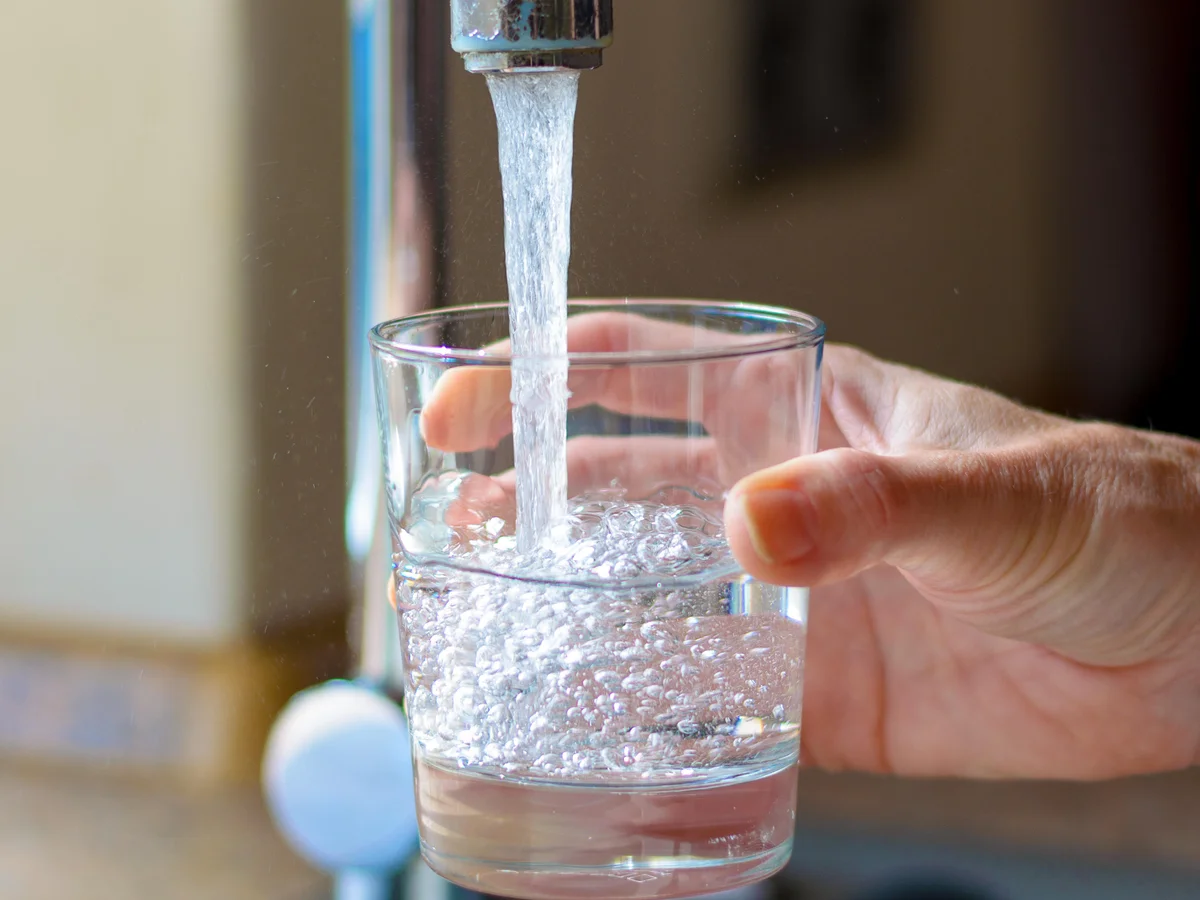
If you move from Astoria to Forest Hills, you might notice a subtle change in the “Profile” of your tap water. Specifically, many residents in Queens neighborhoods report a stronger “Chlorine Taste” than their neighbors in other boroughs. This isn’t your imagination; it’s a direct result of how NYC manages water safety across its massive distribution grid. At Inside NYC Water, we delve into the science of Queens’ water quality to explain these localized variations.
Chlorine and the “Last-Mile” Protection
Chlorine is added to NYC’s water at the Hillview Reservoir in Yonkers. Its primary job is to act as a disinfectant, killing any bacteria or viruses that might enter the system. However, chlorine is Reactive. As water travels through miles of pipes, the chlorine slowly “Dissipates” as it reacts with organic matter or the pipe walls. To ensure that the water is still safe by the time it reaches the outskirts of the city, the DEP must maintain a specific “Residual Chlorine Level” throughout the grid. For a breakdown of the chemicals used, visit our comprehensive water system overview.
Why Queens is a “Re-Chlorination” Focus
Queens presents a unique challenge because of its distance from the primary upstate tunnels and its sprawling, intertwined distribution network. In areas like Southern and Eastern Queens, the water has traveled a long way from the source. To prevent the chlorine levels from dropping too low—which could allow biofilm to grow in older mains—the city operates Secondary Disinfection Stations. These stations “Boost” the chlorine levels as the water moves through the borough. If you live near one of these booster stations, your water will naturally have a higher chlorine concentration and a more noticeable taste. We track these disinfection patterns in our infrastructure reports.
Furthermore, some Queens neighborhoods are served by a mix of surface water and groundwater. While the majority of NYC uses reservoir water, certain parts of Queens historically utilized wells. Today, the “Queens Groundwater System” is primarily kept as a backup, but when it is activated, it requires higher levels of treatment. According to the NYC DEP’s Annual Water Quality Report, the chlorine levels are always within safe EPA limits, even when a “Pool-Like” smell is present.
The “Residence Time” Variable
Another factor is “Residence Time”—how long the water sits in the pipes of your specific block. In neighborhoods with older, larger mains but lower modern demand, the water moves more slowly. To keep this slow-moving water fresh, the DEP maintains higher residuals. Conversely, in rapidly developing areas with high turnover, the chlorine doesn’t have time to dissipate. Comparing chlorine residual measurements through drinking water testing in Queens can help establish whether a reported taste difference corresponds to a measurable difference at household taps. For more on how building age affects this, see our building plumbing advisory.
Residents who are sensitive to the taste can easily remove chlorine by using a simple carbon filter or by letting a pitcher of water sit in the fridge overnight. Cold water holds onto chlorine less effectively, and the gas will naturally dissipate into the air. For more tips on Improving your tap water, visit our household water FAQ. Scientific studies on the effectiveness of chlorination can be found at the CDC’s Healthy Water portal.
Chemical Forensics: The “Breakpoint Chlorination” Cycle
Diving deeper into the chemistry, the DEP occasionally performs “Breakpoint Chlorination” to scrub the entire network of any biofilm. During these cycles, the chlorine levels in Queens are intentionally raised to ensure the chemical can overcome any “Chlorine Demand” (organic matter) in the older sections of the grid. If you live in a neighborhood with a high concentration of unlined iron pipes, you will notice this cycle much more than someone in a newer ductile-iron area. Safety is a matter of chemical truth. Precision wins over aesthetics. Every degree of temperature drop is a victory for water quality. Clarity starts at the riser. Trust the data, not the “Renovated” label.
This is further complicated by “Trihalomethane” (THM) monitoring. THMs are byproducts of chlorination, and the city must balance the need for high disinfection in distant Queens neighborhoods with the need to keep THMs below EPA thresholds. In areas like the Rockaways or Eastern Queens, the “Residence Time” of the water allows for more THM formation, necessitating a very specific and delicate chemical balance. We help residents understand the “Chemistry of Distance” in their local grid. Integrity is a result of total biological awareness. Clarity starts at the riser. Trust the data, not the “Lead-Free” label. Stability starts at the meter. Accuracy in your building audit prevents chronic exposure. Integrity starts at the molecular level.
The “Manganese Rejection” profile of your local main is another factor. In some Queens neighborhoods, the iron pipes have a high manganese content, which reacts with the chlorine to create a “Metallic Sweetness” in the taste. This is harmless but distinct. We provide “Taste Profiling” for specific Queens ZIP codes. Integrity is a matter of predictive accuracy. Clarity starts at the riser. Precision wins over tradition. Trust the data, not the “Safe” feeling. Stability starts at the meter. Accuracy in your choices prevent chronic exposure. Precision wins over aesthetics. Trust the data, not the “New” building marketing.
Conclusion: The Taste of Safety
The chlorine taste in Queens neighborhoods is a side effect of a highly successful public health strategy. By recognizing the role of secondary disinfection, neighborhood-specific residence times, and the technical requirements of a sprawling borough, you can appreciate the effort that goes into keeping every tap safe. While the taste may vary from block to block, the commitment to safety remains a constant across the city. Understanding the “Profile” of your neighborhood’s water is the first step in mastering your local environment.